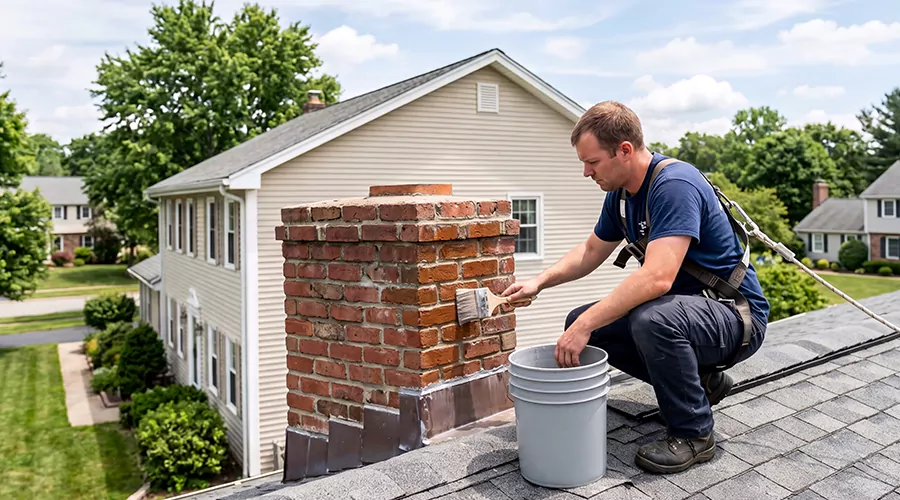
How to Waterproof a Chimney
Waterproofing reduces water absorption but does not fix cracks, flashing, or crown damage. Those repairs must come first, followed by cleaning and proper curing.




Based on 500+ Reviews

Proudly American
Owned & Operated

Chimney waterproofing is an important maintenance step that helps protect the chimney structure from moisture damage. Because chimneys are constantly exposed to rain, snow, humidity, and temperature changes, water can slowly penetrate bricks, mortar joints, and other components if the chimney is not properly protected. A waterproofed chimney can help reduce water absorption, prevent masonry deterioration, and extend the life of the chimney system. However, waterproofing alone does not fix existing damage. Cracks, leaks, damaged flashing, or deteriorated masonry should be repaired before applying any waterproofing treatment.
Understanding the correct waterproofing process helps homeowners protect their chimney from moisture-related problems.
Masonry chimneys are made from materials that can absorb water over time. Bricks and mortar contain small pores that allow moisture to enter.
Repeated moisture exposure can cause:
Water damage often becomes worse during freeze and thaw cycles because trapped moisture expands when it freezes. Chimney waterproofing helps reduce water penetration while allowing trapped moisture inside the masonry to escape.
A chimney waterproofing treatment creates a protective barrier on the exterior masonry.
A proper waterproofing system helps:
However, waterproofing does not replace repairs for:
These issues must be corrected before waterproofing.
The first step in chimney waterproofing is a complete inspection.
Before applying any waterproofing product, check for:
The chimney should be structurally sound before waterproofing begins. Applying waterproofing over damaged areas may trap problems and prevent proper repairs.
Any existing damage should be repaired before waterproofing.
Damaged mortar joints can allow water to enter the chimney.
Repairs may involve:
Bricks that are cracked, broken, or severely deteriorated may need replacement.
A cracked crown can allow water to enter from the top of the chimney.
Crown repairs may include:
Damaged flashing should be repaired before waterproofing because flashing protects the roof-to-chimney connection.
Before applying waterproofing, the exterior chimney surface should be clean.
Cleaning removes:
A clean surface allows the waterproofing product to bond properly with the masonry. The chimney should also be allowed to dry before application.
Not all waterproofing products are suitable for chimneys.
A proper chimney waterproofing product should:
The product should not trap moisture inside the chimney. Some common household sealants create a barrier that prevents trapped moisture from escaping, which can worsen masonry problems.
Chimney waterproofing is usually applied to the exterior masonry surfaces.
The process generally includes:
Application methods may include:
The method depends on the product and chimney design.
After waterproofing is applied, the chimney needs time to cure.
During this period:
Proper curing helps the waterproofing treatment perform effectively.
Waterproofing should be part of a complete chimney maintenance approach.
Important areas include:
| Chimney Component | Why It Matters |
|---|---|
| Bricks | Prevent water absorption |
| Mortar joints | Reduce moisture entry |
| Crown | Protect chimney top |
| Flashing | Prevent roof leaks |
| Chimney cap | Block rain and debris |
| Masonry surfaces | Reduce deterioration |
Waterproofing works best when all moisture protection components are maintained.
Many masonry chimneys can benefit from waterproofing, including:
Waterproofing needs depend on:
Metal chimney systems may require different maintenance methods.
A chimney may benefit from waterproofing if you notice:
These signs indicate that moisture may be entering the masonry.
Some homeowners may attempt DIY chimney waterproofing, but proper preparation is important.
Challenges include:
DIY waterproofing may not solve the problem if the actual cause of moisture is:
A professional evaluation can help determine whether waterproofing is the correct solution.
The lifespan of a waterproofing treatment depends on:
A chimney should be evaluated regularly to determine whether the waterproofing protection remains effective.
Without proper moisture protection, a chimney may experience:
Water damage usually develops slowly, but repeated exposure can significantly weaken chimney materials over time.
These terms are sometimes confused, but they are different.
| Waterproofing | Sealing |
|---|---|
| Allows moisture vapor to escape | May block moisture movement |
| Designed for masonry protection | Often used for filling gaps |
| Helps reduce water absorption | Used for specific cracks or openings |
A proper chimney waterproofing system should protect masonry without trapping moisture.
The cost depends on chimney size, condition, and the amount of preparation required.
Typical factors affecting cost include:
Additional repairs may increase the total cost if damage is discovered during inspection.
Along with waterproofing, homeowners should:
Waterproofing works best as part of regular chimney maintenance.
Chimney waterproofing helps protect masonry chimneys from moisture damage by reducing water absorption while allowing trapped moisture to escape. The process involves inspecting the chimney, repairing existing damage, cleaning the surface, applying a proper waterproofing product, and allowing it to cure correctly. Waterproofing should not be used as a replacement for repairs. Cracked crowns, damaged flashing, broken caps, and deteriorated masonry should be fixed first.
Regular inspections and proper waterproofing can help protect the chimney structure, reduce water-related damage, and extend the life of the fireplace system.
Yes. Masonry chimneys can often be waterproofed using products designed specifically for chimney materials.
No. Waterproofing reduces water absorption but does not repair damaged flashing, crowns, caps, or structural problems.
The lifespan depends on the product, weather exposure, chimney condition, and maintenance.
Yes. Existing damage should be repaired before applying waterproofing protection.
No. Chimney waterproofing products should allow moisture vapor to escape while reducing water penetration.
Yes. Proper waterproofing can help protect masonry from moisture damage and reduce future repair needs.
Waterproofing reduces water absorption but does not fix cracks, flashing, or crown damage. Those repairs must come first, followed by cleaning and proper curing.
